Sunday, March 29, 2015

Prosthetics in Sports


In 2012 Oscar Pistorius became the first double amputee to compete in the outdoor Olympic Games.  The Paralympic Games have existed since 1960, and coincide with the outdoor Olympic Games, and take place in the same city just after the Olympic Games have finished. There have been single leg amputees, and others with disabilities who have competed in Olympic events since the early 1900's, but none have been as controversial as Oscar. Due to the recent advancements in technology, prosthetics are becoming more advanced and more ergonomic. Below is a Washington Post article released in the summer of 2012, and just below that is a video of Pistorius competing in the 400 meter event in 2012.


Skip ahead to 2 minute mark

 
Let's take a second to put aside the charges against Pistorius in the recent years after the 2012 Olympics, because that is not a part of the discussion. I have watched several Paralympic events in person and can say that it is one of the most empowering and motivational things that I have ever seen. The story of Pistorius making it into the London 2012 Olympics is truly amazing and I think many people can agree with that. At what point does that amazement cease? What if Pistorius was a gold medal contender? What would have happened if he had won a gold medal? Do you think that amputee athletes with advanced prosthetics have an advantage over athletes with all limbs intact? If you deem it ethical to allow prosthetics in Olympic competition, then where does the technology end? Should we put a cap on what is allowable?


Wise, M. (2012, August 4). Oscar Pistorius: let's put the controversy to rest and celebrate his achievement. The Washington Post. Retrieved from http://www.washingtonpost.com/sports/olympics/oscar-pistorius-lets-put-it-to-rest-the-controversy-and-celebrate-his-achievement/2012/08/04/d2fcc4bc-de60-11e1-8e43-4a3c4375504a_story.html


Matthias E. Reiber


Monday, March 23, 2015

Harden Kicks LeBron Below The Belt

On March 1, during the game between the Cleveland Cavaliers and the Houston Rockets, James Harden kicked LeBron James below the belt. This incident happened at the third quarter. Harden was double-teamed by the Cavs; then he fell down and kicked LeBron. After reviewing the video recording, the referee gave a flagrant foul 1 to Harden. (McMenamin, 2015)
(Below is the video clip)

“It’s a reaction,” Harden explained his behavior after the game. “They called a flagrant. Next play we moved on”  (Watkins, 2015, para. 5). However, his explanation does not sound convincing, James Jones said: “It was an intentional groin kick. It was an intentional kick to a troublesome area”(Watkins, 2015, para. 11). After the game, LeBron added: “Obviously that’s not a basketball play. Obviously the league will probably take a look at it. I have no idea why he would do that, but two competitors just trying to go at it and he won this one” (Watkins, 2015, para. 12).

On the evening of March 2, the NBA announced the Houston Rockets’ guard James Harden would be suspended for one game (Watkins, 2015).

From my perspective, I agree with the league’s punishment. Because Harden’s kick was obviously an intentional kick, he did not show his respect to LeBron. He deserves the suspension. If the referee gives a flagrant foul 2 to Harden, he will be ejected from the game. If this situation happens, the Houston Rockets may not win the game at the end. As a professional player, Harden should not have done this kick in any situation, because any behavior of a professional player will be magnified under the light of media. Any negative behavior may produce terrible impact on the society or younger players. In addition, I also think Harden did not think carefully when he made the kick, as a key player of Houston in this season. Harden is the most capable player at the last second; because of his absence in the game versus the Hawks, the Rockets lost the game.

How do you think of Harden’s kick toward LeBron? Do you think the league made the correct punishment to Harden? Why? Should players be allowed to do such an action? If you were in LeBron’s situation, what would be your reaction?

References:
James Harden Kicks LeBron In The Nuts - Flagrant Foul! Cavs vs Houston (March 1, 2015). Youtube. Retrieved from
https://www.youtube.com/watch?v=H_kyibFAJy8

McMenamin, D. (March 2, 2015) LeBron: Kick ‘not basketball play’. ESPN. Retrieved from http://espn.go.com/nba/story/_/id/12406025/james-harden-kicks-lebron-james-belt-gets-flagrant-foul-1


Watkins, C. (March 3, 2015) James Harden suspended 1 game. ESPN. Retrieved from http://espn.go.com/nba/story/_/id/12410640/james-harden-houston-rockets-suspended-one-game-kicking-lebron-james-cleveland-cavaliers


--
 Veeco Zheng

Chris Borland's retirement

Chris Borland, a budding star in the NFL announced last Monday on ESPN’s Outside The Lines that he is retiring at the age of 24 due to concerns about the long-term impact of football-related trauma. Borland will have to return most of a signing bonus worth over $600,000 after walking away from a four-year deal worth almost $3 million (Fainaru & Fainaru-Wade, 2015).
Borland has comparatively little history of head trauma next to some NFL veterans. He said he discussed the issue with neuroscientists, former NFL players, and family before making the decision (Fainaru & Fainaru-Wade, 2015).
In regard to his decision, in a follow-up interview with ESPN, Borland said: "I can relate from the outside looking in that it wouldn't make sense to a lot of people, and I've had close friends who have said, 'Well, why don't you just play one more year, it's a lot more money, you probably won't get hurt.' I just don't want to get in a situation where I'm negotiating my health for money. Who knows how many hits is too many” (Fainaru & Fainaru-Wade, 2015, para. 9)?
I myself was surprised to hear of Borland’s choice, simply because it is so unusual for an athlete. I respect and admire Borland’s ability to put his health over his career ambitions. That he is able to leave so much money on the table as he approached the prime of his career playing a sport he loves is a testament to his priorities.
What do you think of Borland’s decision to retire? Do you believe his situation is anomalous or is this something we will now be seeing often with football?

BY Nate Pentecost

References:

Fainaru, S. & Fainaru-Wade, M. (2015, March 18). Inside Borland’s decision to leave. ESPN. Retrieved from http://espn.go.com/espn/otl/story/_/id/12501655/how-san-francisco-49ers-chris-borland-made-decision-retire-safety-concerns

Breaking Good

Joe O'Brien was living is lifetime dream when one of his deepest, darkest secrets threw him off his course and landed him in prison.  O'Brien, 30, had played at Boise State where he accomplished an All-American title and was currently an assistant coach at Montana State. He looked the part of a football player and was praised at his ability at coaching. However, O'Brien had another life that would eventually end the happy one where he coached, he not only did meth but also was a dealer. He had kept his life second life secret for almost ten years before being arrested. A set up by his partner Melissa Strain. At first O'Brien tried to tell everyone that he was innocent and that he had nothing to do with it, but little by little the truth had begun to come out. O'Brien resigned from his coaching position at Montana State and served prison time at eight different detention centers in five different states. In 2006 he was released and had been clean for two years when him and his long term girlfriend, Gracie, married. 
After being released he realized that he still had a goal and a dream to coach football and he would pursue that dream until he had another job. He had applied to countless coaching jobs, whether it was professional or high school he had a applied and they had all returned his resume with a polite but firm no. Then one fateful day he heard from Russ Bloom, a school board member at a high school in Simms, Montana. He wanted to meet O'Brien and talk to him about coaching their football team. He had recently volunteered at Simms High School but was asked to leave due to parents not wanting him around their kids. But this time it was different, Bloom wanted O'Brien as the head coach, to lead the team to victory. There were numerous individuals that petitioned against the whole entire thing but to Joe O'Brien's a four of the seven board members of Simms High School accepted him as their head football coach.
What are your thoughts about a former felon coaching high school football? Do you think this could negatively affect the kids? Or would it show that you can change your life even after making mistakes?

http://espn.go.com/espn/feature/story/_/id/9714247/breaking-good

Kix, P. (2013, September 26). Breaking Good. In Outside the Lines & ESPN Magazine. Retrieved March 23, 2015, from http://espn.go.com/espn/feature/story/_/id/9714247/breaking-good

Amanda Notley

Are Coaches Too Tough or are Athletes Too Sensitive?

Allie McDavitt 

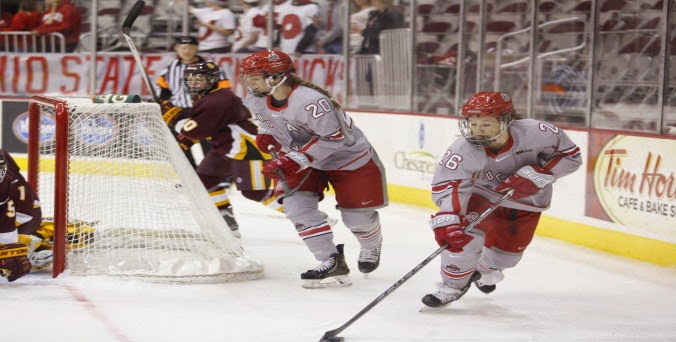
Ohio State’s women’s hockey coach, Nate Handrahan, recently resigned “instead of being fired for violating the university’s sexual harassment, inappropriate conduct and retaliation” policies (Stein & Jones, 2015, para. 3). An investigation was done and witnesses reported Handrahan frequently “used sexually explicit or vulgar language during practices and games” (Stein & Jones, 2015, para. 7).  It was also reported that Handrahan belittled the players with many of them describing him as a “bully.”  The coaching staff described Handrahan’s coaching style as “direct,” “intense,” and “committed” and stated he did not threaten the players. Handrahan denied using inappropriate or sexually explicit language (Stein & Jones, 2015, para. 10). Ultimately, the university’s review found sufficient evidence of the coach’s policy violations. Before the investigation began, Handrahan had received written reprimand by the university after he missed the team bus to the airport and showed up to the airport “intoxicated and unprofessional” (Stein & Jones, 2015, para. 4).


            Handrahan completed his fourth season with the team. In his most recent performance review he received an overall “meets expectations” and was acknowledged for improving student welfare and academic success of the program. He was even awarded a raise in his salary.


            It is interesting that the university was very satisfied with his performance as a coach last May then not even a year later he is no longer working with the program at all. Some controversy is being brought up over his resignation. Many believe the athletes are being sensitive; bringing up the fact that the men’s hockey team probably hears much worse language during their practices. Collegiate athletics, especially division I universities, are extremely competitive. Coaches are going to be tough and push these athletes to their limits. But what is too far? At what point is being a “tough coach” considered unethical? Is it okay for coaches to use sexually explicit language when trying to get a point across? Is it okay for men’s teams to endure that treatment? Would the coach of a men’s team experience the same outcome in a similar situation?

References:
Stein, R & Jones, T. (2015, March 12). Complaints of sexual harassment prompt resignation of Ohio State’s women’s hockey coach. The Columbus Dispatch. Retrieved from http://buckeyextra.dispatch.com/content/stories/2015/03/12/0311-osu-resignation.html

Friday, March 20, 2015

Deterring the N-Word in the NFL

by Joey Durant

During it's off-season meetings regarding policies and competition rules, the NFL considered a rule that would potentially change the entire culture of their game. The use of the "N-word" along with all other offensive slurs based on race, religion, and sexual orientation would be banned from use during NFL games, and would be followed by a 15-yard personal conduct penalty, under the proposed rule (Reid, 2014). Reid stakes his claim as a supporter for the rule in his column, speaking out against the N-word specifically saying, "In no other business are employees legally empowered to harass co-workers based on their race, ethnicity, religious preference or sexual orientation. Why should the working environment in the NFL be any different (Reid, 2014, para. 4)?" Reid follows up his critical stance of the use of the N-word and other slurs by explaining some of the complexities of the issue. He explains the vulgar, inappropriate meaning of the word and how it has become twisted in to a term of endearment and camaraderie in large segments of African-American culture. The newer connotation of the N-word makes this new anti-slur rule a little harder to comprehend because it has grown into such a common utterance (Reid, 2014). One of the NFL's most outspoke players, Richard Sherman of the Seattle Seahawks, expanded on the difficulties of passing such a rule. Sherman was quoted as saying, “it’s almost racist, to me. It’s weird they’re targeting one specific word. Why wouldn’t all curse words be banned then (Greenberg, 2014, para. 2)?" Echoing Sherman's belief, Michael Wilbon made a statement regarding the near racist implications of such a rule being imposed by a league ran by "middle-aged white men" when the league was comprised of "mostly black players (Greenberg, 2014, para. 6)."

Personally, I fall under the same category as Reid; all slurs should be banned from the workplace, whether that work place is an office or a football field. The N-word is no different from other slurs and should be included in the rule, regardless of the popularity of its use amongst any member(s) of the work force.

Do you think using slurs or other similar phrases is appropriate in sport? Do you think the NFL was doing the right thing by trying to ban slurs? Should the N-word be included in the new anti-slur rule? Do you think the N-word has become an irremovable part of the culture of the NFL?

References

Reid, J. (2014, February 25). NFL is right to ban N-word, other slurs, from the playing field. Retrieved from http://www.washingtonpost.com/sports/redskins/nfl-is-right-to-ban-n-word-other-slurs-from-the-playing-field/2014/02/25/970983ee-9e37-11e3-a050-dc3322a94fa7_story.html

Greenberg, C. (2014, March 4). Richard Sherman: NFL Banning The N-Word Is 'Almost Racist' Retrieved from http://www.huffingtonpost.com/2014/03/04/richard-sherman-n-word-nfl-ban-racist_n_4892616.html

Monday, March 16, 2015

Recent Incidents of Discrimination in Soccer

by A. Khuny

There are two incidents from English soccer that relate to this week’s articles:

The first one involves Chelsea FC fans, who started racist chants and refused to let a black man on a train after a Champions League game in Paris (Smith, 2015). As a reaction, some Chelsea fans lifted  banners during Chelsea’s next home games that read “No to racism at the Bridge” or “Black or White, We’re all Blue”. Similarly, Chelsea fans distanced themselves from these incidents when interviewed by 100PctChelsea (the Youtube channel of a Chelsea fan club; see video below). However, one fan that was interviewed in the beginning of the video claimed that, “Chelsea should not be blamed for it” (100% Chelsea, 2015).


The second issue also involves Chelsea FC, this time, however, in a victim role. During last weekend’s game against Manchester United some United fans started sexist chants directed towards Chelsea team doctor Eva Carneiro. While doing further research on this incident, I have found an interesting blog entry by OwenGibson, who not only gives a detailed breakdown about sexism in sport, but also points out on an app named “Kick it Out”, that allows fans to report any kind of discrimination in football stadiums anonymously (Gibson, 2015).

How do you think incidents of discrimination should be tackled? Do you agree, that clubs should not be blamed for the actions of their fans? If yes, who do you think is to blame for such incidents? Furthermore, what do you think about apps like “Kick it Out”? Do you consider them a useful aid to fight discrimination?


References

100% Chelsea. (2015, February 22). Chelsea Fans Give Their Opinions On The ParisTrain Racism Scandal [Motion Picture]. Retrieved from https://www.youtube.com/watch?v=_dDohM12UKA

Gibson, O. (2015, March 5). Sexist chanting at Chelsea’s Eva Carneiro cannot be swept under the carpet. The Guardian. Retrieved from http://www.theguardian.com/football/blog/2015/mar/05/sexist-chanting- chelsea-eva-carneiro

Smith, H. (2015, March 11). Chelsea racism: Five men allegedly involved in Paris Metro      
incident face court appearance. The Independent. Retrieved from http://www.independent.co.uk/sport/football/news-and-comment/chelsea-racism-five-men-allegedly-involved-in-paris-metro-incident-face-court-  appearance-10101412.html